Data Sovereignty & CNDP
Secure your audio recordings and ensure CNDP Morocco compliance in 2026
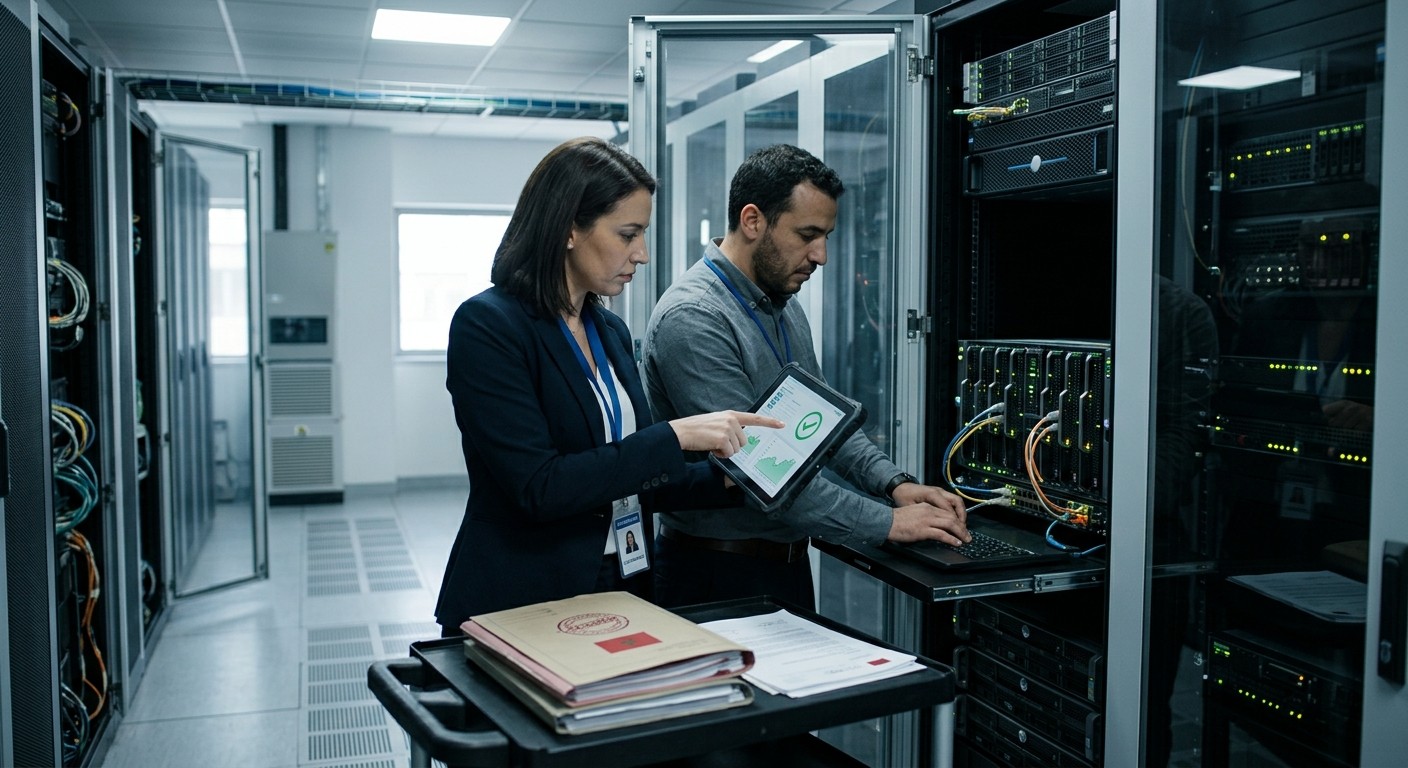
Secure your audio recordings and ensure CNDP Morocco compliance in 2026
Secure your audio recordings and ensure CNDP Morocco compliance in 2026
Meta-description: Find out how to secure your audio recordings and guarantee your CNDP Morocco compliance in 2026 thanks to our tips and best practices.
Why the security of audio recordings is crucial in Morocco
In the era of accelerated digital transformation, voice data has become a valuable yet highly sensitive resource for organizations. For companies operating in the Kingdom, ensuring CNDP Morocco compliance is now an essential strategic imperative to avoid heavy sanctions. Whether it is customer call recordings, business meetings, or voice memos, each audio file contains personal data that must be rigorously protected. In anticipation of the year 2026, regulatory requirements are tightening and demand increased vigilance from data controllers. Understanding these challenges will allow you not only to protect your users, but also to enhance your company's brand image. This guide reveals the key steps to secure your audio streams while remaining perfectly in line with Moroccan legislation.
The legal framework for voice data in Morocco
Audio recordings are not just harmless computer files. They contain voices, intonations, and often confidential information that makes it possible to directly or indirectly identify physical persons. In Morocco, the legal framework governing these practices is strict and is constantly evolving to adapt to modern technologies.
What is Law 09-08?
Law number 09-08 relating to the protection of physical persons with regard to the processing of personal data constitutes the pillar of Moroccan regulation. It clearly defines the obligations of companies that collect, record, or store nominative information. As the human voice is considered biometric data or at least personal data, its collection is subject to strict rules.
Organizations must inform the individuals concerned of the recording and obtain their prior and explicit consent. Furthermore, citizens have rights of access, rectification, and opposition that they can exercise at any time. Failure to respect these principles exposes the company to significant financial sanctions as well as damage to its reputation.
The regulatory evolution towards CNDP Morocco compliance in 2026
By 2026, the National Commission for the Control of Personal Data Protection is strengthening its controls and requirements. Voice processing technologies, such as artificial intelligence and automatic transcription, require an update of security practices. Achieving perfect CNDP Morocco compliance now requires a proactive approach called protection by design.
Companies must be able to prove that they have implemented sufficient technical and organizational measures right from the planning phase of their audio projects. The official website of the CNDP Morocco offers resources and official forms to support professionals in this digital transition. Anticipating these regulatory developments is the best way to sustain your activities without risking service interruptions.
Major risks associated with the storage of audio recordings
Unsecured storage of audio files presents significant vulnerabilities that cybercriminals know how to exploit. Understanding these risks is the first step in designing a robust defense system tailored to your infrastructure.
Data leaks and hacking
Servers containing unencrypted audio files are prime targets for hackers. Once stolen, these files can be analyzed to extract trade secrets, banking information, or health data. Losing control of these files can lead to immediate legal action from impacted customers.
Furthermore, the leak of confidential recordings seriously damages the credibility of a financial institution or a call center. The costs associated with remediating such a breach often far exceed the investments required for their initial security. It is therefore essential to treat these files with the same level of priority as credit card databases.
Unconsented use of voices
With the rise of voice cloning by artificial intelligence, a simple recording of a few seconds can be used to create fakes that are more real than life. These voice deepfake technologies facilitate corporate president fraud or identity theft with your collaborators. Securing access to these files significantly limits the risk of manipulation of your company data.
Many organizations overlook this aspect, thinking that voice is not data that can be exploited by third parties. However, recent news shows that voice-based social engineering is on the rise. Protecting your recordings also means protecting the digital identity of your employees and customers.
Key steps to secure your audio files
To counter these threats and align your practices with national requirements, several technical measures must be deployed without delay. A multi-layered approach ensures that in the event of a system failure, other barriers remain active to protect the information.
End-to-end encryption
Encryption is the cornerstone of modern computer security. All audio files must be encrypted during transfer over the network and when stored on your hard drives. Even if an attacker manages to intercept or steal a file, it will be impossible for them to listen to it without the corresponding decryption key.
Use robust encryption algorithms recognized by international industry standards. Also, ensure that encryption keys are managed in a highly secure manner, ideally separately from where the data is stored. This isolation significantly strengthens the overall protection of your information assets.
Strict access management
Not all employees in your company need to access audio recordings to carry out their daily tasks. The principle of least privilege must be applied rigorously within your information system. Only authorized individuals from a specific department should be able to listen to or download these sensitive files.
To structure this access policy, apply the following rules:
– Mandatory two-factor authentication for all user accounts.
– Systematic logging of every read, modification, or deletion action.
– Immediate revocation of access for employees who leave the company or change positions.
– Periodic analysis of access logs to detect any abnormal or suspicious behavior.
Anonymization and pseudonymization
Whenever possible, apply anonymization techniques to your audio files before analyzing them or storing them long-term. Pseudonymization, for example, consists of replacing the names of interlocutors with unique non-nominative identifiers. Complete anonymization permanently removes any possibility of identifying the person, notably by altering the voice or deleting metadata.
These practices significantly reduce the sensitivity of data held within your infrastructures. They also simplify your compliance procedures, as truly anonymized data no longer falls within the scope of Law 09-08. It is a winning strategy to reconcile data exploitation with respect for privacy.
How to obtain and prove your CNDP Morocco compliance
CNDP Morocco compliance is not just about adopting technical protection measures. It also requires a rigorous administrative component to prove your good faith and compliance with the legal procedures in force.
Prior notification and authorization
Before proceeding with any systematic audio recording, you must make a declaration to the competent authorities. Depending on the nature and sensitivity of the data collected, a simple prior declaration or a specific authorization request will be required. This process allows the commission to evaluate the legitimacy of your approach and the proportionality of the data processed.
Do not wait for an inspection to be initiated to start these sometimes complex administrative procedures. Transparent management of your administrative forms strengthens the trust of your business partners and customers. Additionally, it demonstrates your active commitment to the protection of privacy in Morocco.
Keeping a rigorous processing register
The processing register is a reference document that catalogs all activities related to personal data within your organization. For each processing activity involving audio recordings, you must specify the essential elements for its traceability.
Your register must contain the following information:
The precise purpose of the recording, such as team training or proof of transactions.
The categories of individuals affected by these collections of voice information.
The exact retention period of the audio files before their permanent destruction.
The physical and logical security measures implemented to protect them.
The internal and external recipients who are authorized to access these files.
The crucial role of data sovereignty in 2026
Digital sovereignty has become a major concern for economic decision-makers in Morocco. Storing your audio recordings on servers located outside the national territory can pose complex legal problems. CNDP Morocco compliance imposes strict restrictions on the transfer of personal data to third countries.
By choosing to host your audio files on local structures or sovereign clouds installed in Morocco, you eliminate these risks of non-compliance. You guarantee that your data remains exclusively subject to national laws, thus protecting your company against potential extraterritorial laws. This local approach is particularly recommended for sensitive sectors such as health, finance, and public administration.
In addition, using a trusted local host facilitates the physical and logical security audits required by the commission. You control the entire value chain of your data, from its capture to its final archiving. This is a major competitive advantage in a market where digital trust has become a cardinal value.
Implementing a compliance action plan
To confidently approach the deadlines of 2026, you should structure your compliance process in a methodical manner. A progressive action plan will prevent you from overloading your technical teams while guaranteeing measurable and lasting results.
Begin by conducting a complete audit of all existing audio flows within your organization. Identify where sounds are captured, through which channels they transit, where they are stored, and who can access them. This comprehensive mapping will highlight potential security gaps and deviations from national legislation.
Next, train your employees on personal data management and cybersecurity best practices. A sensitized staff is the first line of defense against human errors and phishing attempts. Set up clear procedures to respond quickly to requests for access or erasure made by your customers. Finally, regularly review your security protocols to adapt them to new cyber threats.
To effectively secure your audio recordings and guarantee your CNDP Morocco compliance in the long term, support from experts in the field is a key success factor. Do not leave the management of your voice data to chance as regulations tighten for the year 2026.
Take the lead today by evaluating your current systems and adopting technological solutions adapted to your data sovereignty. Contact our team of specialists at Dax AI for a personalized diagnostic of your audio data management infrastructure. Together, let’s transform your regulatory constraints into opportunities for growth and trust for your customers.
Also read: securing the sending of your webhooks to guarantee CNDP compliance.
Also read: guaranteeing CNDP compliance of your audio KPIs.